 Sentrly
Residential vs Datacenter Proxies
What each one is, what they’re actually used for, and the ethical lines that matter.
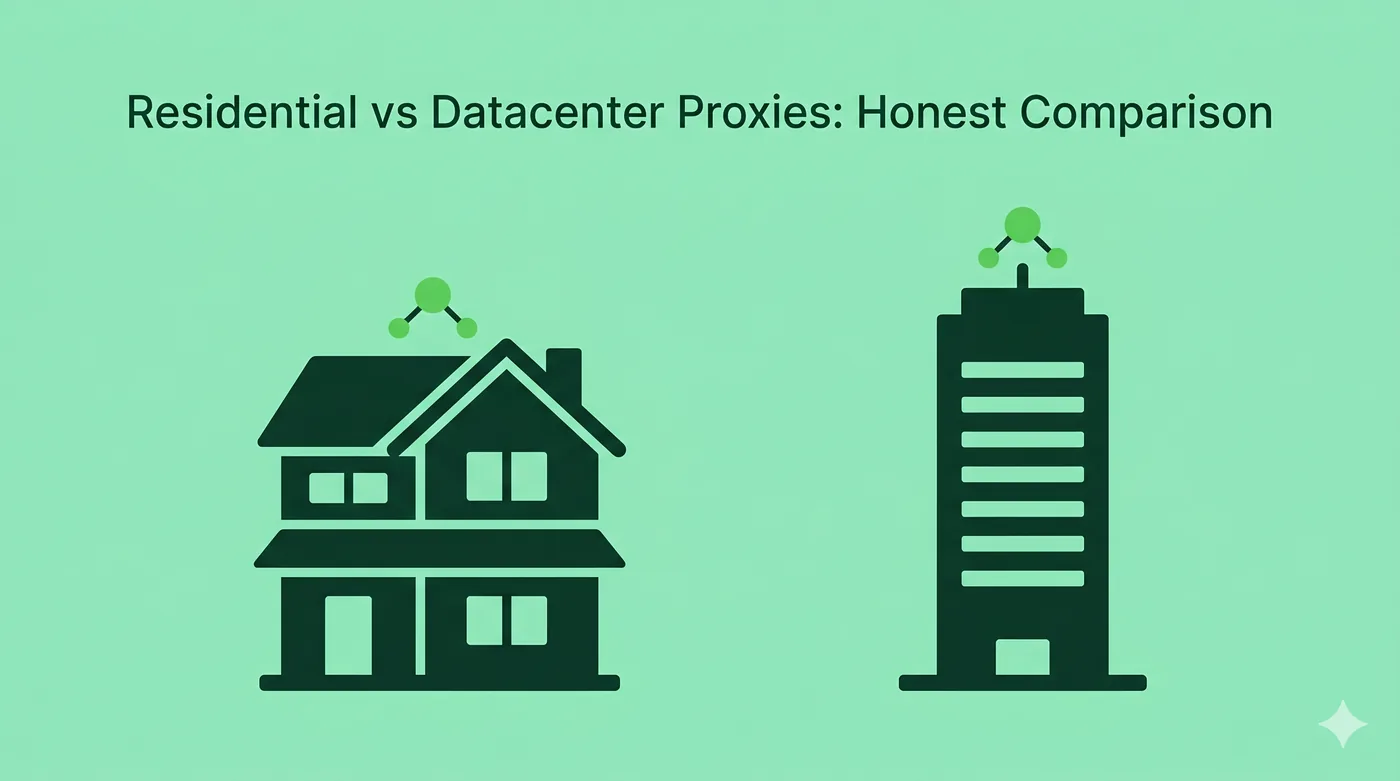
Datacenter proxies are IPs hosted in cloud data centres — fast, cheap, and easy for sites to identify. Residential proxies use IPs from real home internet connections — slower, more expensive, and harder to detect. Use the cheapest option that meets your requirements.
Key takeaways
- Datacenter proxies are best for low-sensitivity tasks like uptime monitoring.
- Residential proxies blend in but raise consent and ethics questions for end-users.
- Always check a proxy provider’s sourcing policy before buying.
- ISP proxies are a middle ground — datacenter speed, residential-looking IPs.
Datacenter proxies: speed and cost
Hosted in commercial data centres, these proxies are fast, predictable, and inexpensive. They are easy to fingerprint — large websites maintain lists of known cloud IP ranges and can apply extra friction to traffic from them.
Residential proxies: realism and ethics
Residential IPs come from real home connections. The crucial question is consent: did the person whose connection is being used opt in knowingly? Reputable providers pay app developers to bundle the proxy SDK with clear disclosure to users; less reputable ones do not.
ISP proxies: the middle ground
ISP proxies are hosted in data centres but registered to consumer ISPs. They combine the speed of datacenter and the appearance of residential. They’re popular for ad verification and SEO tools.
Choosing responsibly
Read the provider’s sourcing page. Look for explicit user consent, ethical-sourcing audits, and an opt-out mechanism. If you can’t find any of that, choose another vendor.
Frequently asked questions
Are residential proxies legal?
Operating one is generally legal, but using one to violate a site’s terms of service or local laws is not. Always read the rules of the site you’re accessing.
Can I tell if a proxy is residential?
From the outside, the IP is registered to a consumer ISP. Determining whether the underlying user consented is harder — that is the provider’s responsibility to disclose.
Why are residential proxies so much more expensive?
Each IP represents real bandwidth on a paying household connection. The pricing reflects that cost.
Related guides
Forward Proxy vs Reverse Proxy: What’s the Difference?
Same word, two completely different jobs. Here’s a clean mental model.
Read article →SOCKS5 vs HTTP Proxies: Use Cases for Developers
When to reach for SOCKS5 and when an HTTP proxy is the better tool.
Read article →How Businesses Use Proxies for Legitimate Web Data Collection
Price comparison, SEO, brand protection — and how to do it without breaking rules.
Read article →